Job card · No. 05
Join cabinet boxes and hang the doors
Cabinet work is repeating a hole position exactly. A drill jig does that for joints, hinge cups and shelf pins.
Before you start
- Decide which joint you need. A pocket screw hides on the back face, while a dowel leaves both faces clean.
- Check the pocket kit's stock range of 1/2 inch to 1-3/4 inch against your boards.
- Match the hinge's screw spacing to one the jig lists.
- Confirm your shelf pins are 1/4 inch before you buy the shelf pin jig.
- Connect a vacuum to the dust port where the jig has one.
- Where
- Workshop
- Level
- Intermediate
- Tools reviewed
- 4
- Work orders
- 2
- Why this level
- The job is rated Intermediate because each jig needs setup before the first hole. Depth collars, edge stops and hinge spacing all have to be set right, and a mistake cannot be undone.
01 · The job
What the job takes
Two boards meet at a right angle, and you want the joint to hold without a screw head on the show face. Later the fourth door of the day goes on, and the hinge cup sits a hair off. Both come down to putting a hole in the same place every time.
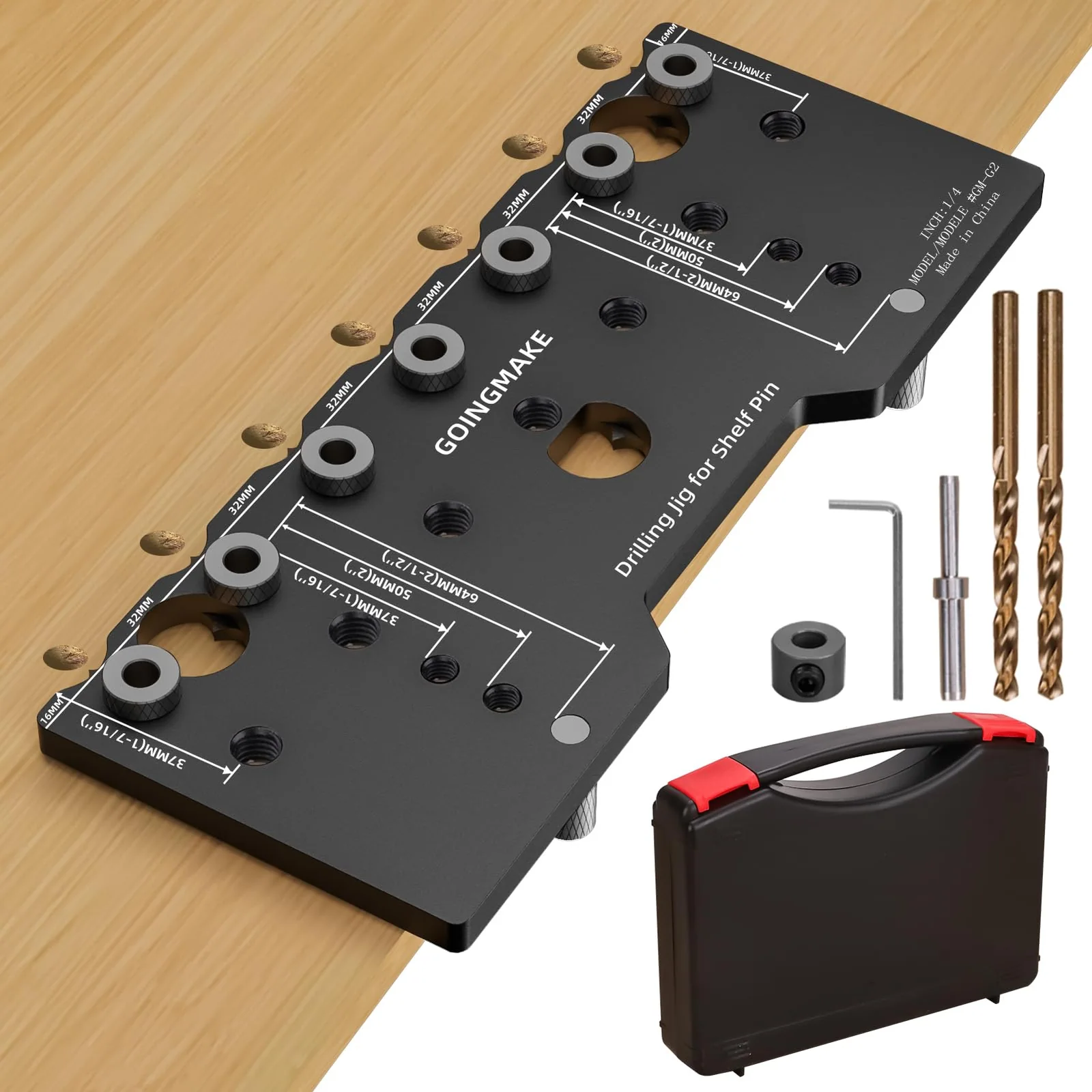
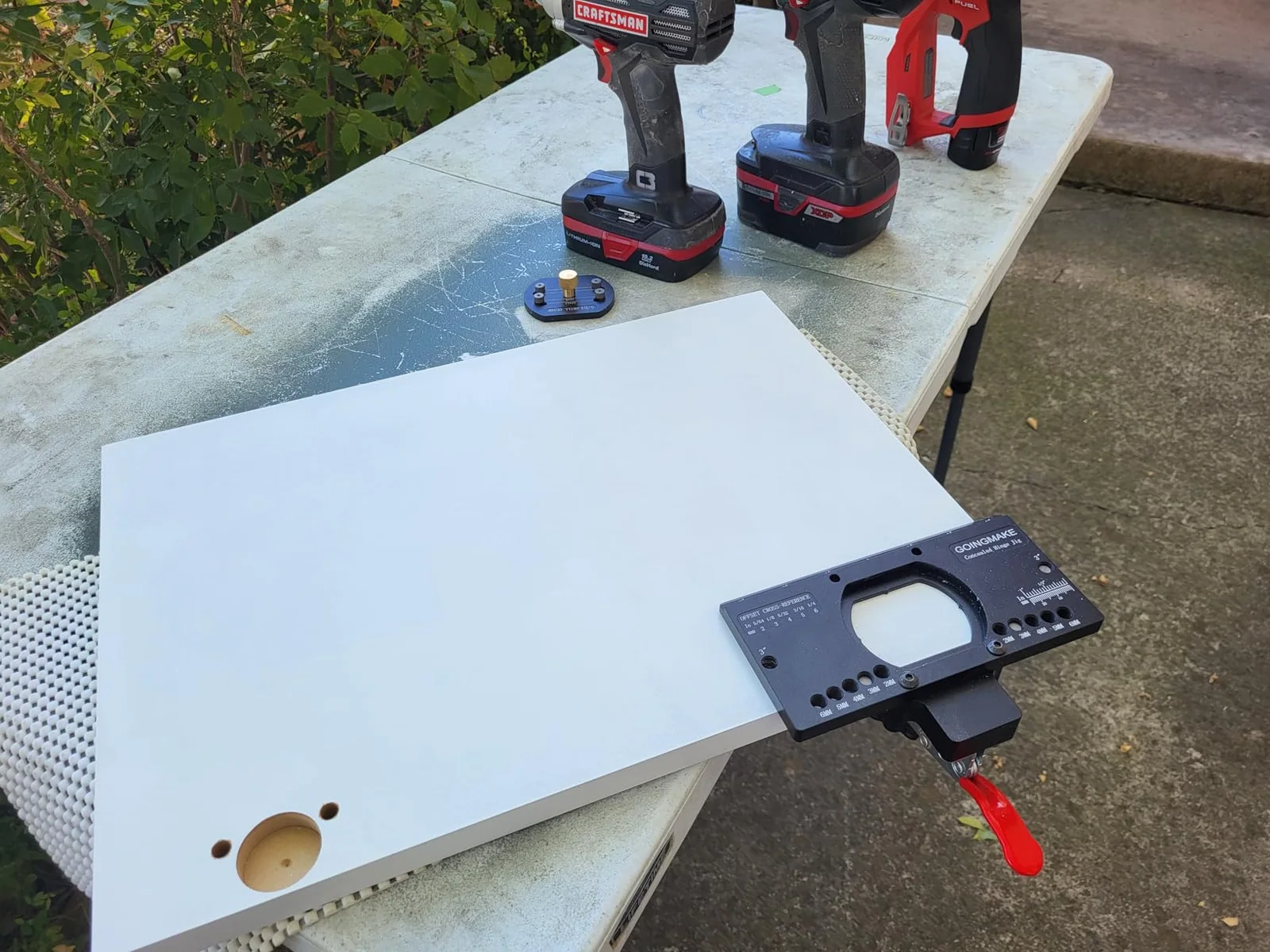
A pocket hole jig angles a screw into the joint, and a doweling jig drills matching straight holes for dowels and glue. A hinge jig guides the cup hole, and a shelf pin jig drills a row of pin holes.
02 · The steps
How to set up the pocket hole jig and avoid broken bits
- Measure the board and set the drill guide to its thickness on the inch or millimeter scale.
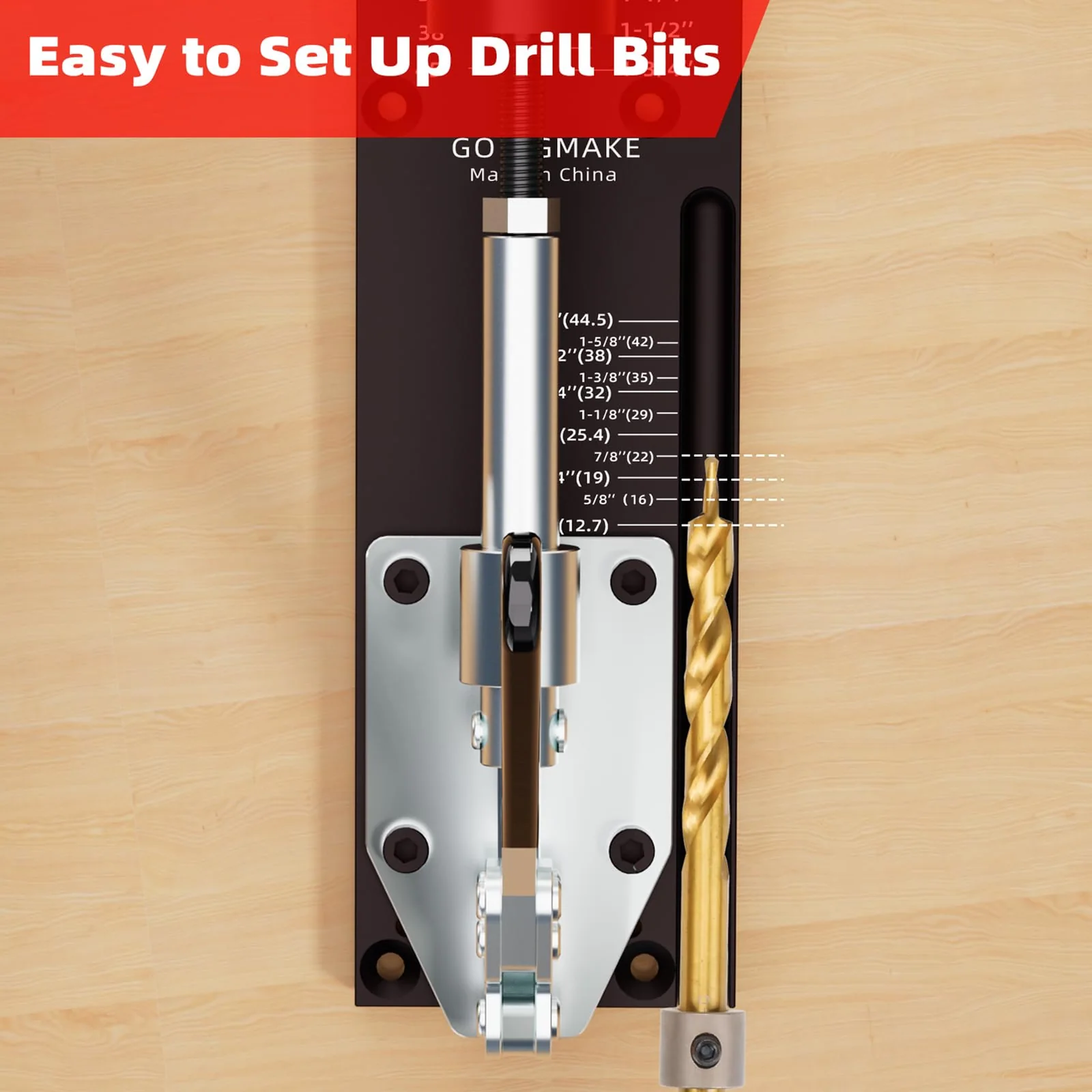
- Set the depth collar on each 3/8 inch bit using the spot in the base, before the first hole.
- Fit your vacuum hose to the dust port and check that the connection holds.
- Clamp the board with the quick clamp, or fasten the base to the bench for long stock.
- Drill the pocket holes with the vacuum running so chips can leave the hole.
- Drive the pocket hole screws from the kit, and add plugs if the hole will show.
Steps from the work order Pocket Hole Jig or Doweling Jig for Hidden Joints in Wood, written from the product manuals and pages.
03 · Where it goes wrong
What trips buyers up
Drill bits break most often. Three reviewers of the pocket kit describe a broken bit, and one ties it to chips with nowhere to go. Another broke both bit tips in four holes in 16 mm MDF.
Depth and size trip people next. Buyers of the hinge jig say depth took several attempts. The shelf pin jig drills 1/4 inch holes only, so owners of 5 mm hardware need another jig.
04 · Questions from the bench
Questions about this job
Should I use pocket screws or dowels on a cabinet box?
A pocket screw goes together fast, and the hole stays on the hidden face. Dowels leave both faces clean but need careful layout. Face frames and boxes suit pockets, and edge joints suit dowels.
How do I learn a hinge jig without ruining a door?
Practice on scrap the same thickness as the door. Set the depth between 0 and 0.6 inch, drill a test cup with the 35 mm bit, and fit the hinge. Adjust the depth if it sits proud or deep, then drill the real door.
Do I need a vacuum for these jigs?
It helps. The pocket kit has a vacuum port, and reviews tie it to cleaner holes and, when it was skipped, to a broken bit. The hinge jig has a port sized for a 1-3/8 inch hose.
Tools for the job
4 tools from 2 work orders
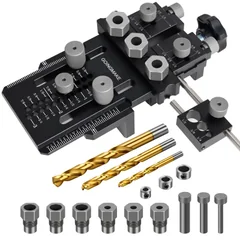
GOINGMAKE All-Metal Pocket Hole Jig Kit WITH CAVEATS: Recommended, with caveats
$52.99Price It on AmazonGOINGMAKE Doweling Jig Kit with Stops PASS: We recommend
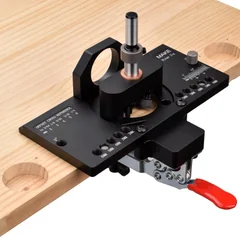
$89.99Price It on AmazonGOINGMAKE G35 Concealed Hinge Jig PASS: We recommend
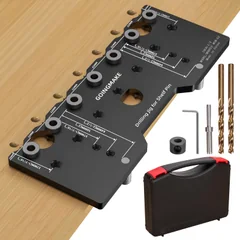
$52.99Price It on AmazonGOINGMAKE 1/4 Inch Shelf Pin Jig WITH CAVEATS: Recommended, with caveats
$29.99Price It on Amazon
Watch the job
The tools at work
Full work orders
The reviews behind this job
-
WO 007WorkshopIntermediate
Pocket Hole Jig or Doweling Jig for Hidden Joints in Wood
1 WITH CAVEATS1 PASS2 tools · Ray Delgado
-
WO 008WorkshopIntermediate
Cabinet Hinge Jig and Shelf Pin Jig Compared for Woodshops
1 PASS1 WITH CAVEATS2 tools · Ray Delgado