Work order No. 042 · Yard, Garden & Outdoor
Electric Post Hole Digger, Extension Bits and Tamper Shank
One digger, one set of extensions and one tamper shank for the fence line: which is a clear buy and which needs a fit check first.
- Where
- Yard
- Level
- Intermediate
- Tools compared
- 3
- Brands
- JACKCHEN
- Written by
- June Abernathy, yard, garden and outdoor work
- Published
- November 16, 2026
- Reading time
- 13 min
On the rule · Cutting diameter, to scale in inches
3 of 3 drawn to scale from the sizes on the product pages
Ten fence posts means ten holes
Ten fence posts means ten holes, and a clamshell digger turns every one of them into a workout. The mailbox post, the row of shrubs and the deck footings tell the same story in smaller doses. That is the job an electric auger is meant to shorten.
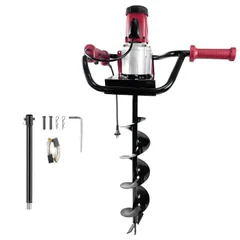
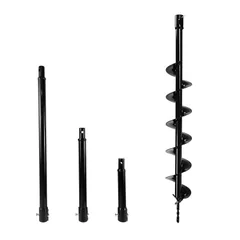
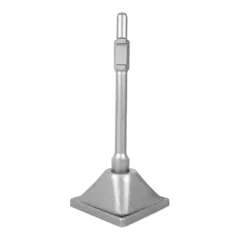
Three JACKCHEN products sit in this corner of the yard. One is a 1500-watt electric post hole digger with a 6-inch bit, and one is a set of three extensions sold with a 4 by 31 inch auger bit. The last is a 30 mm hex tamper shank for a demolition hammer, the tool you would reach for after the post is set and the fill needs packing.
They are not three versions of one thing. The digger works once it is plugged in. The extension set is an accessory whose fit note names a different machine brand. The tamper shank helps only if your hammer takes a 30 mm hex.
Count your holes and look at your ground first. A dozen holes along a tree line ask different things of a tool than three holes for a mailbox post, and the right pick changes with them.
One step comes before every shovel, bit and hammer. The Common Ground Alliance, which runs 811, says some utilities can be buried just inches below the surface, and that every digging project, regardless of depth, requires contacting 811 a few days in advance. It adds that not contacting 811 before digging is the top driver of damages to buried utilities every year.
We would pick the digger for most yards with clear, soft ground. The tamper shank is a conditional buy because of fit, and the extension set is one to check with the brand first. The reasons and the limits come next, product by product.
How the three differ on size, fit and proof
Cutting diameter (inches)
Owner rating (of 5)
Owner ratings
Price
| Feature | JACKCHEN 1500W Electric Post Hole Digger | JACKCHEN 3-Piece Auger Extension Set | JACKCHEN 30 mm Hex Tamper Shank | Also reviewed · SUNPOWSUNPOW Rechargeable Metal Detector OTMD15 | Also reviewed · SUNPOWSUNPOW Kids Metal Detector OTMD10 |
|---|---|---|---|---|---|
| Price | $159.99 | $72.99 | $75.99 | $109.99 | $59.99 |
| Best for | a fence line or shrub row with a power source nearby | owners of a machine the brand names who want a longer bit | packing stone, gravel or fill under a small slab with a matching hammer | beginners who want a waterproof coil and a rechargeable battery | ages 8 to 12 on a first backyard or beach hunt |
The digger is the only complete tool here. It plugs in and digs, and its main limits are the 6-inch width, the cord and the risk of a lockup in rocks or roots. The extension set and the tamper shank are add-ons that depend on another machine.
On size, the digger carries a 6-inch auger and the extension set lists a 4 by 31 inch bit. If your posts or tree pots need the wider hole, the narrower bit is the wrong one. If you want a tight flag hole, it may be the right one.
On fit, the tamper shank is the most clearly spelled out, since it names a 30 mm hex and one JACKCHEN hammer. Even so, a buyer needed a friend's milling machine to make it work. The extension set names JKCHENPRO machines, which makes it the least certain of the three.
On proof, the digger has the most buyer feedback and the tamper shank has some. The extension set has none, so its coating and fit claims all rest on the brand's word.
On job order, the digger comes first, the shank comes last, and the extension set slots in only if your machine takes it. Buy in that order and you can stop wherever the job ends.
The corded digger for clear, soft ground
- 11500W motor
- 2Anti-vibration grip
- 3Auger bit
Nameplate · JACKCHEN
| In the box | Drill Bits |
|---|---|
| Weight | 16 ounces |
| Blade or disc | 6 inches |
| Material | Tungsten Carbide |
| Use | Soil |
The JACKCHEN digger is a corded tool. The brand rates the motor at 1500 watts and lists 200 rpm and 90 ft-lb of torque, so those are the brand's numbers. The bit is 6 inches across, and the details name tungsten carbide for the cutting material, three spiral flutes, a straight shank and soil as the recommended surface.
Buyers describe it as quick. One had three holes 2 feet deep dug 15 minutes after unboxing it, and called the torque more than enough. Another drilled 14 holes to 36 inches deep and chose it over a two-stroke auger, saying that in their experience a two-stroke under 200 dollars is not durable.
The 6-inch width is the part to think about before you order. That same 14-hole buyer was setting 4 by 4 posts, and they advise finding an 8-inch auger instead.
15 minutes after unboxing I had three holes 2 ft.deep dug.
Their reasoning is that a wider hole leaves more room to place and level the post, and less work with a manual digger afterward. If you are setting 4 by 4 posts, weigh that against the 6-inch bit.
On handling, the brand describes a security lock on the left-hand side meant to guard against accidental triggering. It also lists skid-proof handles and an anti-vibration grip, and says the design gives stability. Those are the brand's claims, and buyer reviews do not dispute them.
The cord is the plain trade-off. One buyer's only downside is that you have to be by an electrical socket or have a generator available. For a fence that runs far from the house, plan how you will get power out there before you plan the holes.
The warning that matters most comes from a buyer who otherwise loves the tool. They caution that with rocks, trees or roots in the area you are digging, the auger could lock up and you could get hurt. We take that as the line between a good fit and a bad one: this is a tool for clear, soft ground, and stony or rooty ground calls for a different method.
The same buyer likes that they no longer have to worry about gasoline carburetors clogging, and says they will never buy a gasoline auger again. That is one person's view, but it points at a real difference. A corded motor has no fuel to go stale between fence projects.
Buyers rate it 4.5 stars across 114 ratings, and roughly three of every four give the full five stars, at about 74 percent. About 11 percent sit at three stars or lower. Skip it if you need holes wider than 6 inches, if your ground is full of roots or rock, or if the nearest outlet is a long way off.
Owners on the JACKCHEN 1500W Electric Post Hole Digger
5 out of 5 Great product recommend it to my friends
This auger is easy to use just plug-in to power source and start making holes. 15 minutes after unboxing I had three holes 2 ft.deep dug. This auger has more than enough torque. Not sure when I'll need it again but I will not have to be worried about gasoline carburetors clogging up are any problems like that. I will probably use it this spring for planting shrubs in my yard. The only downside is it you have to be by an electrical socket or have a generator available. I will never buy a gasoline powered auger again. One word of caution if you have rocks, trees (or roots) in the area you are digging this could lock up and you could get hurt. I highly recommend this product. I am sorry I didn't take pictures.
5 out of 5 Great tool
After much deliberation I settled on this electric over a 2 stroke because in my experience any 2 stroke under $200 is just not durable. This think is smooth and powerful, very surprised and happy with it. Drilled 14 holes easy, 36" depth. My recommendation is if you're doing 4X4 post installs, find an 8" auger, life will be much easier, not so much finishing with a manual post hole digger. ( more room in the hole to place and level post exactly where you want it).
An accessory with a fit note to read
- 1Carbide pilot tip
- 2Extension tube
This is an accessory, and it is the hardest of the three to judge. The title lists a set of three extensions and a 4 by 31 inch auger bit for an earth auger. The brand's bullets say it is designed for use with JKCHENPRO gasoline and electric auger drills.
Read that brand line twice. The JACKCHEN digger has a 6-inch bit and the model number JC-EA300-15. The extension set's fit note names JKCHENPRO machines, so confirm with the brand that it works with your auger before you order, and match the shank and drive on your machine to it.
The bit is a carbon steel pilot with a tungsten carbide cutting tip. The brand adds a black powder coated finish and says it resists rust and corrosion. Treat that as the brand's claim about the coating, since no buyer has reported on how it holds up.
The brand also says the bit drills holes in all types of soil and leaves the dirt around the edge of the hole loose and easy to pack. That is a broad claim. A buyer of the JACKCHEN digger warned that rocks and roots could lock up an auger, so judge your own ground before you lean on a claim like all types of soil.
The brand lists wooden decorative fences, chain link fences, decks, patios, planting trees or shrubs and flag holes as uses. If the 4 in the title is the bit's width, it is narrower than the digger's 6-inch bit. Hold your post, flag pole or tree pot next to a 4-inch measure before you buy.
The set comes with a one-year warranty, according to the brand. That is the only support promise stated for it.
No buyer ratings or reviews are attached to this set yet. Nobody outside the brand has said whether the extensions lock tight to the auger, whether the 31-inch length is enough for a deep post hole, or how the powder coat looks after a season of mud. That gap is the main reason for a conditional verdict.
It suits someone who already owns a machine the brand names and wants a longer reach for flag holes, shrubs or narrow posts. It does not suit someone shopping for a first digger. For that, the electric digger is a complete tool, and this set is an add-on you can wait on.
Packs fill well, but only on a 30 mm hex
- 1Hex shank
- 2Tamper foot
Nameplate · JACKCHEN
| Blade or disc | 30 millimeters |
|---|---|
| Material | Alloy Steel |
| Use | Alloy Steel |
A tamper comes in after the post is set. You shovel fill back around it and need it packed hard, and this shank is made for that step on a demolition hammer. It is a 1-3/16 inch (30 mm) hex shank, and the brand says it fits a hammer's chisel locking system for that hex size.
The brand names one machine, the JACKCHEN JC-100A gas demolition jack hammer with a 30 mm hex. It also calls the shank universal for electric and gas hammers, so the size matters more than the brand on your tool. The item details mention a 6 by 6 inch plate, soil and gravel compaction, chromium-vanadium steel and a chrome finish.
The brand says the chromium-vanadium steel gives increased hardness and resistance to abrasion, oxidation and corrosion. It lists loose granular soils, dirt, gravel and sand as the right materials. Those are brand claims, and buyers say nothing about wear.
Buyers are happy with the packing.
One used it on a 19 by 11 foot slab with 18 inches of fill and a 50 pound jack hammer. A laborer took about two hours, and that buyer says the work passed a soil compaction inspection. Another used it on stone and dirt, and says it also works on blacktop when weeds pop up.
The fit comment is the one to read. A four-star buyer titled the review Make sure you check size and fit, and they got it to work with the help of a friend with a milling machine. So the label on the shank and the shank on your hammer do not always match as cleanly as you'd hope.
The same buyer says it works with a 35 pound hammer and with a 70 pound hammer, though it is a bit heavy on the bigger one. If you own a light hammer or have a weak grip, that weight matters. Check the weight your hammer carries comfortably before you commit.
Buyers rate it 4.4 stars across 44 ratings. About 60 percent are five stars and 26 percent are four stars. About 14 percent are two or three stars, and none are one star.
Skip it if you do not already own a hammer, if your hammer takes any shank other than a 30 mm hex, or if you only need to pack a few square feet. A hand tamper costs less and needs no machine.
Owners on the JACKCHEN 30 mm Hex Tamper Shank
4 out of 5 Make sure you check size and fit.
Definitely make sure you check the size before making your purchase. I made it work with a help of a friend with a milling machine, because the price was right. Quality is good. I used it with my harbor freight 35lb jack hammer. It also works with my 70lb Dewalt hammer. It’s a bit heavy with the big hammer but works if you can hold it.
5 out of 5 Good tamp.
I used this for a 19x11 slab that we brought in 18” of fill with a 50# jackhammer. Didn’t bring it up in lifts. Took a laborer about two hours but it worked great. We passed soil compaction inspection. Normally on a small slab like that I bring it up in six inch lifts. We added a few inches of extra fill and compacted once and the slab fill was like a rock. We didn’t stretch it. Every square inch we put that ramp on. Works great for small slabs.
Who should buy which one
We recommend the JACKCHEN 1500W digger if your ground is clear and soft and a power source is within reach. Buyers praise its speed and torque, and the one serious warning is about rocks and roots. If you set 4 by 4 posts, consider the wider bit one buyer suggests.
We don't recommend it for stony or rooty ground. One buyer says the auger could lock up and cause an injury, and we take that seriously. For that kind of ground, a manual digger or a different method is the better call.
The extension set is a conditional buy at best. The brand ties it to JKCHENPRO augers, and no buyer has rated it. Confirm the fit with the brand before you order, and expect a bit narrower than the digger's.
The 30 mm tamper shank is also conditional. Buyers like how it compacts fill and soil, but one needed a milling machine to make it fit and found it heavy on a large hammer. Buy it only if you own a hammer with a 30 mm hex shank and enough fill to pack.
If you want one purchase for the fence line, the digger is it. The other two wait until you know your machine and your slab.
How to plan a fence-post line with an electric auger
Plan the line before you pick a tool. Ten holes along an open fence line suit an electric digger, while a handful along a tree line may not. The steps below follow what the brand states, what buyers report and what 811 says.
Power is part of the plan. Buyers say you need a socket or a generator, so work out how the cord or the generator reaches the farthest hole before you start.
Pack the fill only after the post is set. A tamper shank fits a hammer with a matching 30 mm hex shank, and one buyer packed 18 inches of fill in about two hours with a laborer.
- Contact 811 a few days before you plan to dig, whatever the depth.
- Walk the line and mark any rocks, trees or roots, since a buyer warns the auger could lock up on them.
- Match the bit width to your post: the digger's bit is 6 inches, and one buyer advises 8 inches for 4 by 4 posts.
- Work out where the socket or generator sits and how the power reaches the farthest hole.
- If you plan to add an extension set, confirm the fit with the brand first, because it names JKCHENPRO machines.
- Measure the shank on your demolition hammer against 30 mm hex before you buy the tamper.
What buyers keep saying
JACKCHEN 1500W Electric Post Hole Digger
4.5 (114 ratings)JACKCHEN 30 mm Hex Tamper Shank
4.4 (44 ratings)The digger collects the most praise, and it is about speed and strength. Buyers mention three holes in 15 minutes, 14 holes to 36 inches and more than enough torque. Nearly three quarters of owners rate it five stars, and 15 percent give four.
The complaints are short and consistent. You need a socket or a generator, the 6-inch bit may be narrow for 4 by 4 posts, and rocks or roots could lock up the auger. None of those complaints is a defect, but each is a reason to know your site before you buy.
The tamper shank draws praise for compacting fill under small slabs and for working on stone, dirt and blacktop weeds. Its complaints are about size and fit, plus weight on a bigger hammer. Of its ratings, about 60 percent give five stars and 26 percent give four, while the rest land at three stars or lower.
The extension set has no buyer feedback attached. That is why we lean on the brand's own statements there and keep the verdict conditional.
One warning across all three is that they depend on power or a matching machine. A tool that plugs in or bolts on does nothing until the other piece is in place.
One word of caution if you have rocks, trees (or roots) in the area you are digging this could lock up and you could get hurt.
Definitely make sure you check the size before making your purchase.
Suitable for loose granular soils, dirt, gravel, and sand, etc.
Star averages, the star split and monthly “bought” counts as they stood on the product pages on November 16, 2026.
When another way of digging or packing wins
A manual post hole digger is better when you have two or three holes, no outlet nearby, or ground you suspect is full of rocks and roots. It is slower work. For a mailbox post, though, a manual digger needs no cord and carries no risk of a lockup.
A gas auger is better when the job sits far from any outlet. The tradeoff is fuel and upkeep. One buyer of the electric digger switched away from gasoline because of carburetor trouble and does not plan to go back, which tells you what some owners think of the gas route.
A wider auger is better when you are setting 4 by 4 posts. That reviewer advises an 8-inch auger for the extra room, so a 6-inch bit is a compromise on that job.
Renting is worth considering when you only have one fence to build. The hole count may not justify a purchase, and a rental clears the space in your shed afterward.
A hand tamper is better when you have no demolition hammer and the area is small. It packs fill without a machine and without a 30 mm hex shank. A hammer with a tamper shank is better when the slab is large, since the buyer who packed 18 inches of fill under a 19 by 11 foot slab needed about two hours with a laborer.
Whatever you choose, the 811 call comes first. It applies to a shovel as much as an auger.
Questions owners ask before the job
Which is better for fence posts, the JACKCHEN digger or the extension set?
The JACKCHEN 1500W digger is the better choice, because it is a complete tool with a 6-inch bit. The extension set is an accessory for machines the brand names as JKCHENPRO, and it has no buyer ratings. Buy the digger first and add an extension set only after confirming the fit.
Is the JACKCHEN 1500W digger good for planting shrubs and trees?
The brand lists tree planting as a use, and one buyer plans to use it on shrubs in their yard. The 6-inch bit suits that scale. The same buyer warns that rocks, trees or roots in the area could lock up the auger, so check the planting spot first.
Do I need to call 811 before using an electric post hole digger?
Yes, the 811 service says every digging project, regardless of depth, requires contacting 811 a few days in advance. It also says some utilities can be buried just inches below the surface. That covers a 6-inch auger hole as much as a deep one.
How deep can the JACKCHEN digger go?
Buyers report 2 feet and 36 inches, and one drilled 14 holes to 36 inches. Those are buyer figures, so check the bit length against your post depth before you start.
Will the 30 mm tamper shank fit a jack hammer?
It fits a hammer whose chisel lock takes a 1-3/16 inch (30 mm) hex shank, according to the brand, which names the JACKCHEN JC-100A. One buyer had to have it machined to fit, so measure your hammer's shank before you order.
Is the JACKCHEN digger good for 4 by 4 fence posts?
It works, though one buyer who set 4 by 4 posts with it says an 8-inch auger would make life easier. Their reason is more room to place and level the post. The digger's bit is 6 inches, so it leaves a tight hole around a post.
Sources
This review touches on safety. It is general information, not professional advice: follow the product's manual and the warnings on its label, and call a licensed professional for gas, electrical, structural or refrigerant work.
- Call 811 before you dig, 811 (Common Ground Alliance). Read November 16, 2026.
Next on the board
More work orders for “set a line of fence posts”
-
WO 041YardIntermediate
Gas T-Post Driver vs 30 mm Hex Socket for Fence Posts
1 PASS1 WITH CAVEATS2 tools · June Abernathy
-
WO 038Yard & Garden
Rechargeable and Kids' Metal Detectors for Beach and Backyard
1 WITH CAVEATS1 PASS2 tools · June Abernathy
-
WO 039Yard & Garden
SUNPOW Pinpointer and Digging Shovel for Metal Detecting
1 WITH CAVEATS1 PASS2 tools · June Abernathy
-
WO 040Yard & Garden
SUNPOW Retractable Hose Reel and 10-Pattern Hose Nozzle Review
1 WITH CAVEATS1 PASS2 tools · June Abernathy